
Mole Removal in Berkshire: What to Expect
Thinking about having a mole removed is a bigger decision than it first seems. You might want it gone for cosmetic reasons, or you might simply be worried about how it looks. Either way, it helps to know what mole removal actually involves. This guide walks through the process we follow for mole removal in Berkshire at Apex Skin Clinic in Maidenhead.
At Apex, a consultant assesses every mole before any removal takes place. This matters, because no two moles need exactly the same approach. Below, we explain when removal is appropriate, what the procedure involves, and what recovery looks like.
Why People Have Moles Removed
There are two broad reasons for mole removal. Some people want a mole removed for cosmetic reasons, perhaps because it catches on clothing or sits somewhere visible. Others need removal because a mole looks unusual or has changed, which raises a medical concern.
Both reasons are valid. However, the approach can differ slightly depending on your reason for removal. A cosmetic removal is usually straightforward. A change-related removal often involves closer assessment first, so your consultant doesn't miss anything.
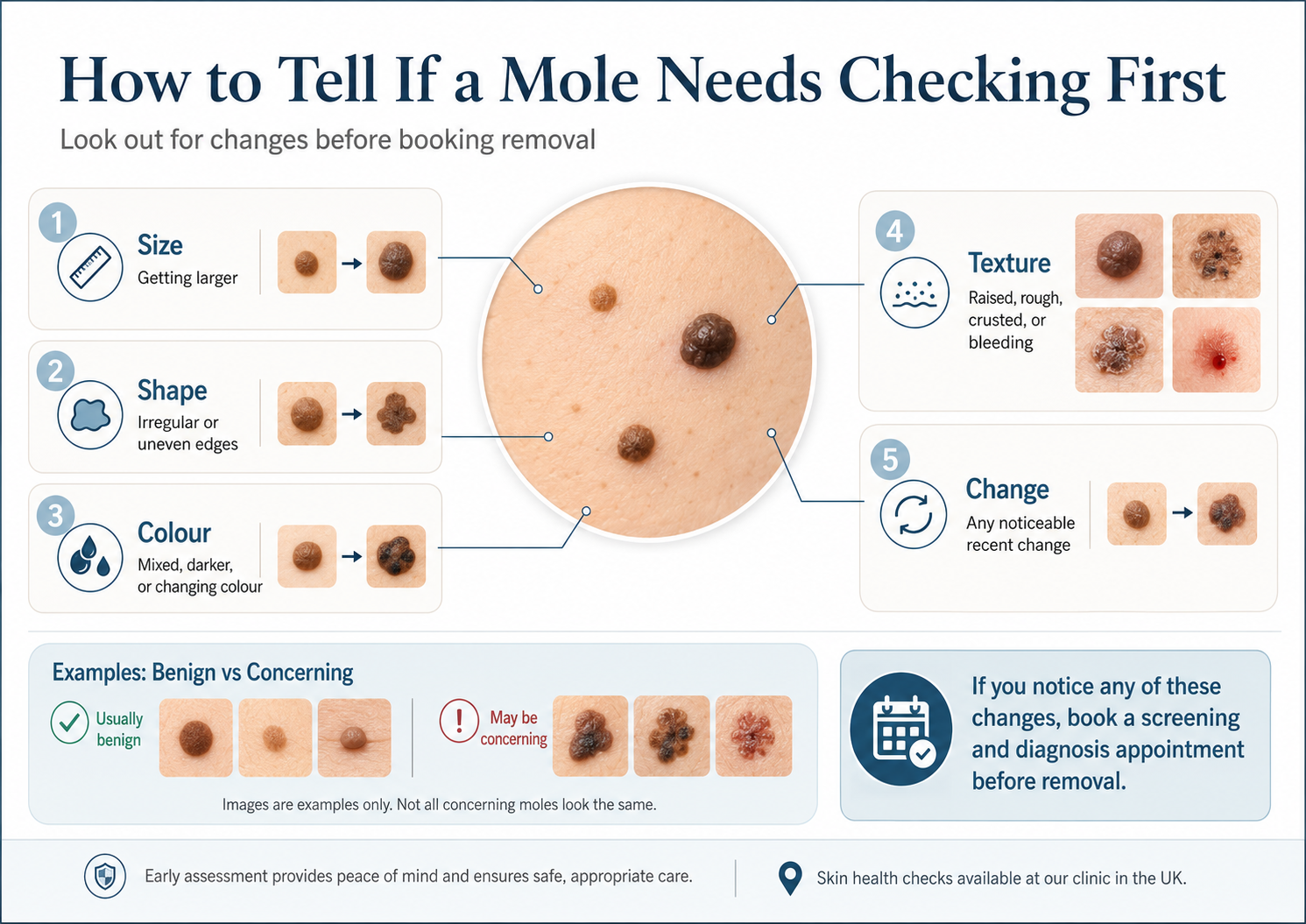
How to Tell If a Mole Needs Checking First
Not every mole needs to come off, and not every mole is safe to simply have removed without assessment. Before booking removal, it helps to know what changes are worth flagging. For instance, changes in size, shape, colour, or texture are all worth mentioning to your consultant.
Our guide to the early signs of skin cancer covers these warning signs in more detail. If you're unsure whether a mole needs a closer look first, book a screening and diagnosis appointment. This is a better starting point than going straight to removal.
What Happens During Mole Removal at Apex Skin Clinic
Every mole removal begins with a consultation. Your consultant examines the mole, discusses your reasons for wanting it removed, and explains what the procedure will involve. This step matters, because it shapes the whole plan.
Your consultant removes most moles by excision, which means removing the mole along with a small margin of surrounding skin. First, they numb the area with local anaesthetic, so you'll be awake but won't feel pain. Minor excisions are typically quick, and most patients describe the experience as comfortable rather than painful.
Larger moles, or those in more complex areas, may need a more involved excision. Your consultant will always explain this beforehand, so there are no surprises on the day.
Will Your Mole Need Testing?
In many cases, yes. Even when you choose removal for cosmetic reasons, we often send the tissue for laboratory analysis as standard practice. This confirms the mole was benign and gives you peace of mind.
If you had any concern about the mole beforehand, this step becomes even more important. Our types of skin cancer guide explains how consultants assess different lesions. It also covers what happens if a result needs further investigation.
Recovery and Aftercare After Mole Removal
Healing time depends on the size and location of the mole. Minor excisions usually heal within one to two weeks, while larger procedures can take a little longer. Most patients return to normal daily activities within a few days.
Where you need stitches, your consultant typically removes them within one to two weeks. Apex Skin Clinic provides full aftercare and monitoring throughout this period, including wound checks and guidance on scar care. If your consultant flags any other lesions during your visit, mole mapping can help track them over time.
Will Mole Removal Leave a Scar?
Any procedure that removes skin will leave some form of mark. However, your consultant will always aim to minimise this, using precise technique and clear aftercare guidance. Most scars fade significantly over the following months, particularly with good sun protection and proper wound care.
Why Choose a Private Clinic for Mole Removal?
Choosing a private clinic for mole removal in Berkshire means faster access to a named consultant. It also means the same experienced team handles every step, from assessment through to aftercare. At Apex Skin Clinic, we see most patients within days of their initial enquiry.
The clinic operates from Berkshire Grove Hospital in Maidenhead, with an on-site surgical suite and histopathology service. Patients travel to Apex from Reading, Windsor, Bracknell, London, and across the South East for consultant-led care.
Frequently Asked Questions
Does mole removal hurt?
Not usually. Your consultant numbs the area with local anaesthetic beforehand, so you shouldn't feel pain during the procedure itself. Most patients describe some mild pressure rather than discomfort.
Will I need stitches?
It depends on the size and depth of the mole. Smaller removals may not need stitches, while larger excisions usually do. Your consultant will explain this during your consultation.
Can I have a mole removed for cosmetic reasons alone?
Yes. Many patients choose mole removal simply because a mole bothers them, rather than for medical reasons. Even so, your consultant always assesses the mole first, to rule out anything that needs closer attention.
How long does it take to heal after mole removal?
Most minor excisions heal within one to two weeks. Larger or more complex removals can take longer. Your consultant will give you a clear recovery timeline before your procedure.
Do I need a GP referral to be seen at Apex Skin Clinic?
No. You can self-refer and book a private consultation directly, without a GP letter. That said, we're also happy to accept referrals if your GP has recommended us.
Book a Mole Removal Consultation at Apex Skin Clinic
If you're considering mole removal, the first step is a proper assessment, not just a booking. This way, your consultant uses the right approach from the start, whether your reasons are cosmetic or medical. Contact our team today to arrange a consultation with a consultant plastic surgeon or dermatologist.
This article is for informational purposes only and does not constitute medical advice. If you are concerned about a skin change, please consult a qualified medical professional.
Apex Skin Clinic