
Are Your Everyday Products Causing Your Skin Concern?
A persistent skin rash is often blamed on dry skin or sensitivity. In many cases, however, the real cause is an allergic reaction to a product used every day.
Skincare, cosmetics, jewellery, and even medicated creams can trigger allergic contact dermatitis. This may lead to redness, irritation, or inflammation that does not settle. These reactions are often mistaken for simple eczema.
At Apex Skin Clinic Berkshire Grove Hospital, we provide consultant-led allergy testing in Berkshire, including patch testing for patients travelling from London and surrounding areas. Identifying the exact trigger is often the key to lasting improvement.
What Is Allergic Contact Dermatitis?
Allergic contact dermatitis is a type of skin inflammation caused by a delayed immune reaction to a substance. Unlike immediate allergies, symptoms usually appear 24 to 72 hours after contact.
Because the reaction is delayed, it can be difficult to link the rash to the product causing it.
Symptoms may include:
Redness
Itching
Scaling
Swelling
Blistering in more severe cases
Persistent facial or eyelid dermatitis
If the allergen is not identified, the rash often returns despite treatment.
Allergy to Skincare and Cosmetic Ingredients
An allergy to skincare ingredients is one of the most common causes of contact dermatitis.
Fragrance is a frequent trigger. It is found not only in perfumes, but also in moisturisers, cleansers, shampoos, and products described as natural. Certain preservatives, such as methylisothiazolinone, can also cause reactions.
Many patients believe they simply have dry skin. In reality, they may be reacting to a product used daily.
Persistent Eyelid Inflammation – Blepharitis or Allergy?
Ongoing eyelid irritation is often labelled as blepharitis, which means inflammation of the eyelids. Blepharitis has several causes. Allergic contact dermatitis is one possibility that should not be overlooked.
Symptoms may include:
Red or swollen eyelids
Flaking skin around the eyes
Burning or itching
Recurrent eyelid dermatitis
Allergens from nail products, cosmetics, or hair dye can transfer from the hands to the face. An allergy patch test can help determine whether contact allergy is contributing to symptoms.
Hair Dye and PPD Allergy
Para-phenylenediamine, known as PPD, is used in many permanent hair dyes. PPD allergy may develop gradually and worsen with repeated exposure.
Symptoms can include:
Itching or burning of the scalp
Facial swelling
Rash around the hairline
Eyelid or neck dermatitis
A formal patch test is required to confirm diagnosis. Home testing kits are not a substitute for a specialist skin patch test performed under dermatology supervision.
Nail Products and Acrylate Allergy
Gel and acrylic nail products contain acrylates, which are recognised allergens.
The rash may not appear on the nails themselves. Instead, patients may develop eyelid dermatitis or facial irritation due to transfer from the hands.
This pattern is easily missed without structured allergy patch testing.
Metal Jewellery and Nickel Sensitivity
Nickel allergy is common and may present as:
Rash under earrings
Irritation from necklaces
Wrist dermatitis from watches
Rash from belt buckles
Symptoms may come and go, which can make the cause harder to identify.
Topical Antibiotics and Medicated Creams
Some topical antibiotics can trigger contact dermatitis, particularly with repeated use. Patients may notice that a cream prescribed for a skin rash appears to make it worse.
In these situations, patch testing may help clarify whether an allergy is present.
Sunscreens and Summer Dermatitis
Sunscreen is essential for skin cancer prevention. However, certain chemical UV filters or added fragrance ingredients can cause reactions in some individuals.
Facial dermatitis that worsens during summer months may benefit from specialist allergy testing.
What Is a Patch Test?
A patch test is a dermatology investigation used to diagnose allergic contact dermatitis.
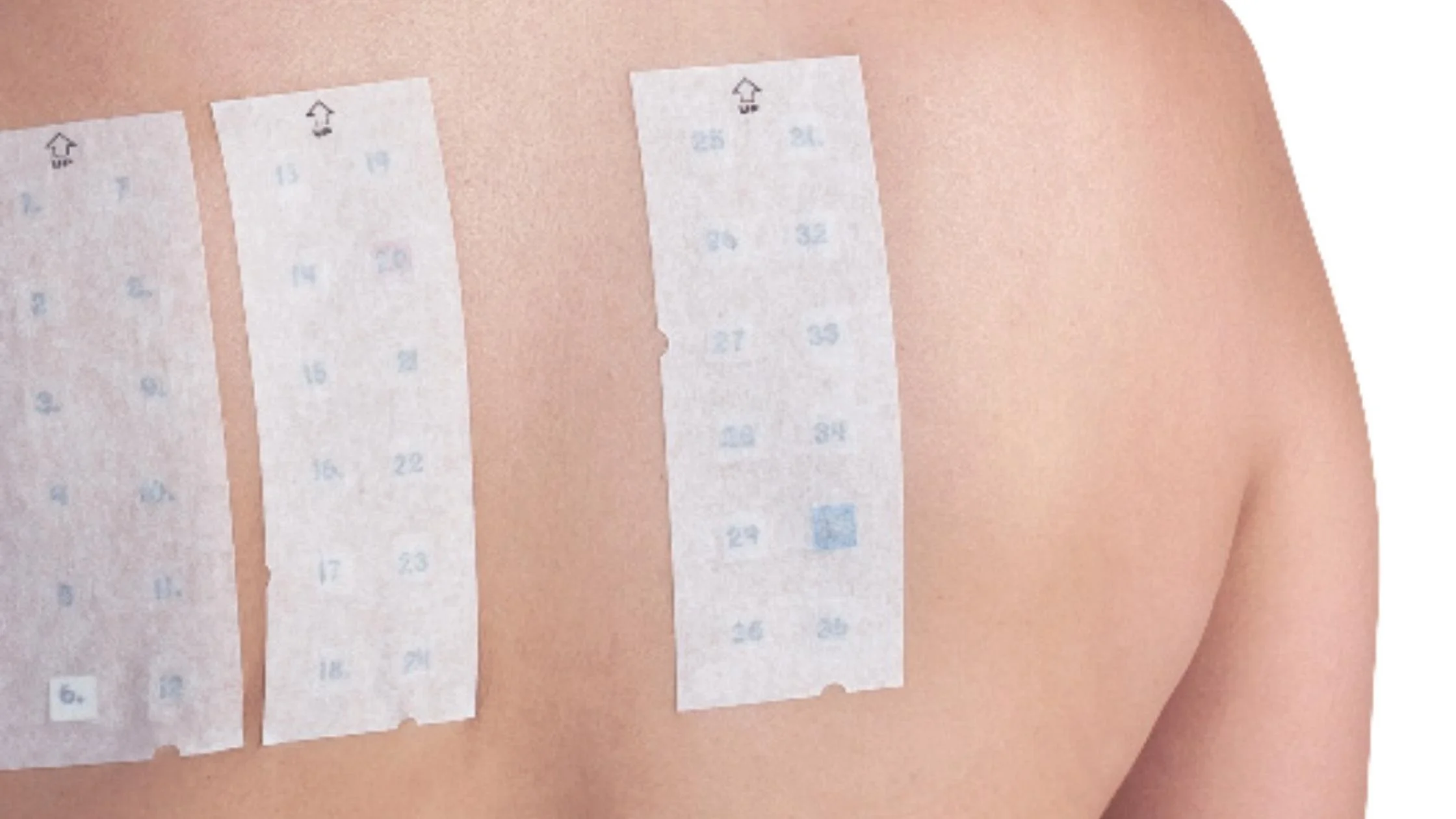
Small amounts of common allergens are applied to the back using adhesive patches. The skin is checked after 48 hours and again several days later to look for delayed reactions.
Unlike blood-based allergy tests, patch testing focuses on delayed skin reactions.
At Apex Skin Clinic Berkshire Grove Hospital, we provide consultant-led patch testing in Berkshire for patients seeking allergy testing in London or private allergy testing locally. Following results, patients receive clear guidance on allergen avoidance.
Who Should Consider Allergy Patch Testing?
You may benefit from patch testing if you:
Have a persistent skin rash
Suspect an allergy to skincare
Experience recurrent eyelid dermatitis
React after hair dye use
Have chronic hand eczema
Notice worsening dermatitis despite treatment
A dermatologist-led allergy test differs from over-the-counter kits. Specialist assessment ensures accurate interpretation.
Why Identifying the Allergen Matters
Without identifying the trigger, dermatitis often continues to flare. Steroid creams may control symptoms temporarily, yet they do not remove the cause.
A structured allergy test allows targeted advice on which ingredients to avoid. This often leads to long-term improvement.
Where to Have Patch Testing in Berkshire and London
Apex Skin Clinic Berkshire Grove Hospital provides private allergy testing in a consultant-led setting in Maidenhead.
We offer:
Comprehensive allergy patch testing
Clear result interpretation
Personalised avoidance advice
Ongoing dermatology support
Our clinic is accessible for patients seeking patch testing in Berkshire or London.
If You Are Concerned About a Persistent Rash
Ongoing dermatitis can affect comfort and confidence. Many patients feel reassured once a specific allergen is identified.
If you are experiencing a recurring skin rash, suspected contact dermatitis, or inflammation of the eyelids, structured patch testing may provide clarity.
At Apex Skin Clinic Berkshire Grove Hospital, our focus is accurate diagnosis, evidence-based care, and long-term skin health.
Frequently Asked Questions About Patch Testing and Skin Allergies
What is a patch test?
A patch test is a specialist dermatology investigation used to diagnose allergic contact dermatitis. Small amounts of common allergens are applied to the back using adhesive patches. The skin is reviewed after 48 hours and again several days later to assess for delayed reactions. This type of allergy patch test identifies substances that may be causing a persistent skin rash.
How is a patch test different from other allergy tests?
Patch testing is designed to detect delayed skin allergies. Blood-based allergy tests and immediate allergy testing identify rapid reactions such as hay fever or food allergies. A skin patch test focuses specifically on contact dermatitis and delayed immune responses affecting the skin.
Is patch testing painful?
Patch testing is not painful. The patches remain in place for 48 hours and may cause mild itching if a reaction develops. Any redness or irritation usually settles once the allergen is identified and avoided.
Can an allergy to skincare cause eyelid inflammation?
Yes. An allergy to skincare or cosmetic ingredients can cause eyelid dermatitis and may be mistaken for blepharitis, which refers to inflammation of the eyelids. Patch testing can help determine whether contact allergy is contributing to persistent eyelid symptoms.
When should I consider allergy patch testing?
You should consider allergy patch testing if you have:
A persistent or recurrent skin rash
Suspected contact dermatitis
Ongoing eyelid dermatitis or suspected blepharitis
Reactions after hair dye use
Eczema that does not improve with treatment
Consultant-led allergy testing in Berkshire or London can help identify the underlying cause.
Where can I have patch testing in London or Berkshire?
At Apex Skin Clinic Berkshire Grove Hospital, we provide private allergy testing and patch testing in a consultant-led setting in Maidenhead. Our clinic is accessible for patients seeking patch testing London, allergy testing Berkshire, or a structured allergy test London.